ND BrainSpace
ND BrainSpace is a free peer-support community for neurodivergent adults, whether you're diagnosed, self-identifying or exploring neurodivergence.
We bring people together to share experiences, swap ideas, explore challenges and connect with others who understand.
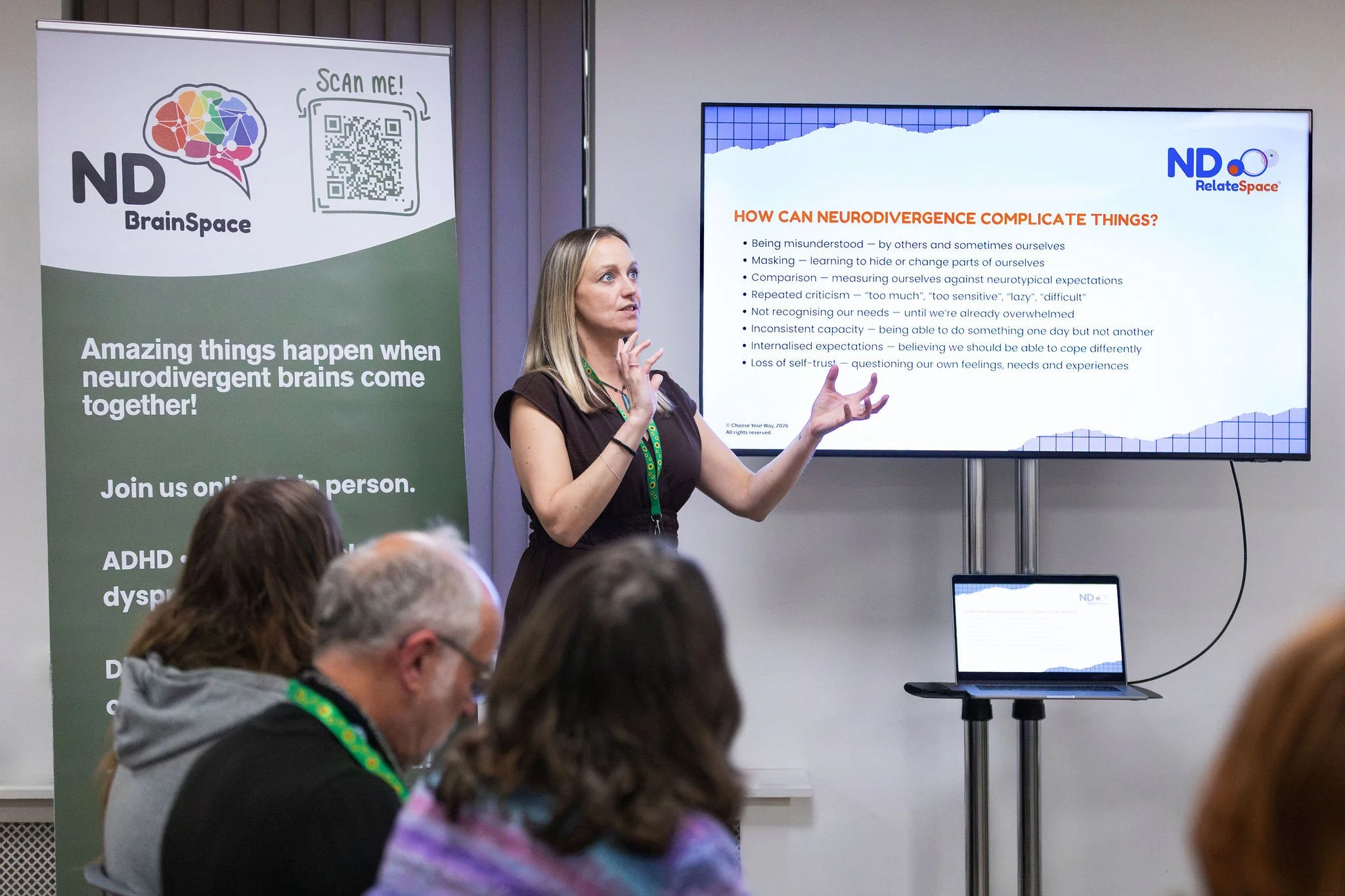
Our monthly in-person groups in Warwickshire and online lunchtime sessions explore topics such as wellbeing, relationships, confidence, burnout and everyday life through a neurodivergent lens.
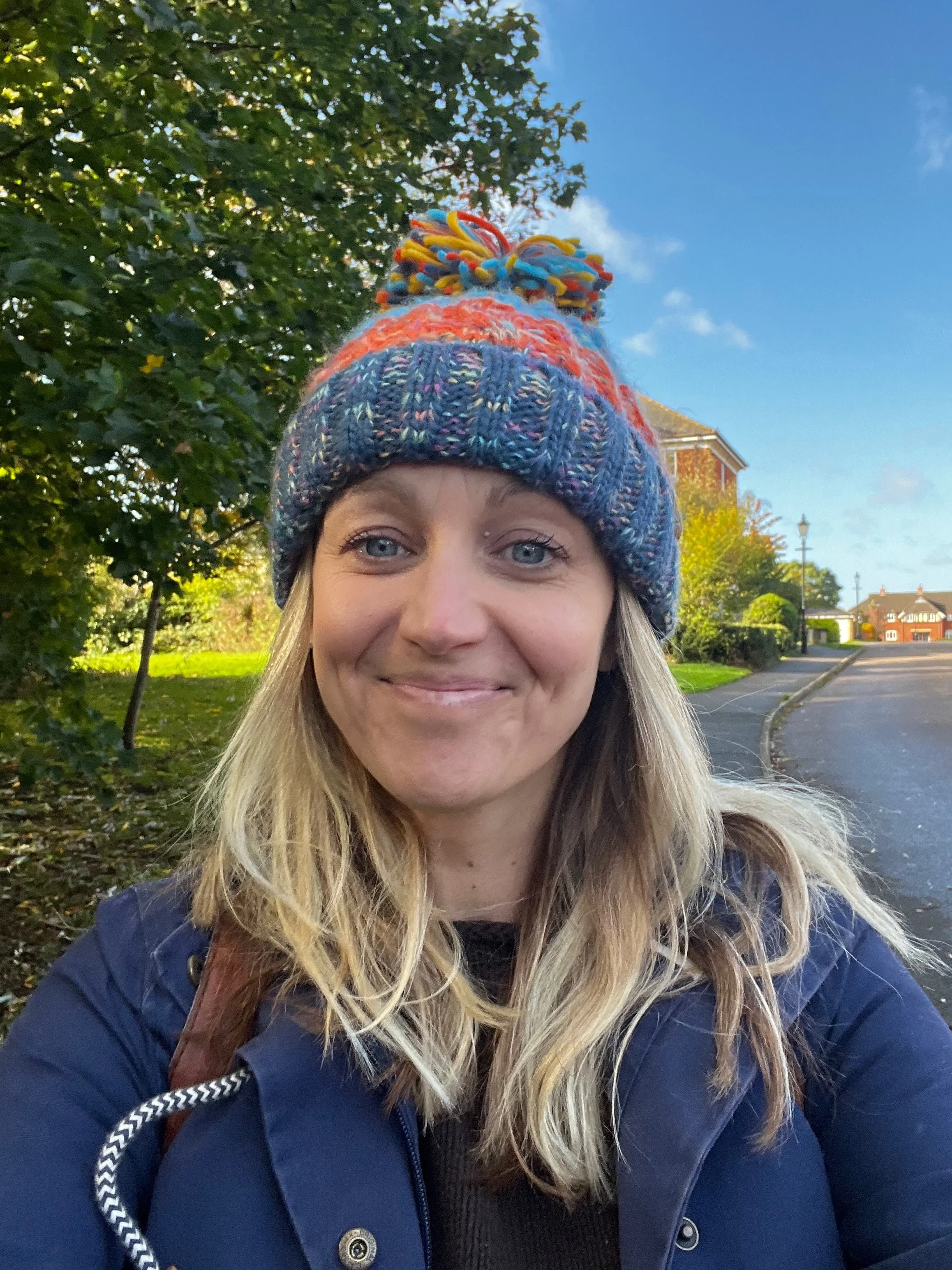
Our sessions are facilitated by Hannah Chatterley, a qualified counsellor and coach specialising in neurodivergence, bringing both professional knowledge and lived experience to create a welcoming, understanding and inclusive space.
We also organise ND Café meet-ups, walks and social events, offering different ways to connect and build friendships.
Our sessions are relaxed, informal and shaped by the people who come along. Join the conversation or simply listen — whatever works for you.
No pressure to fit in. Just come as you are!
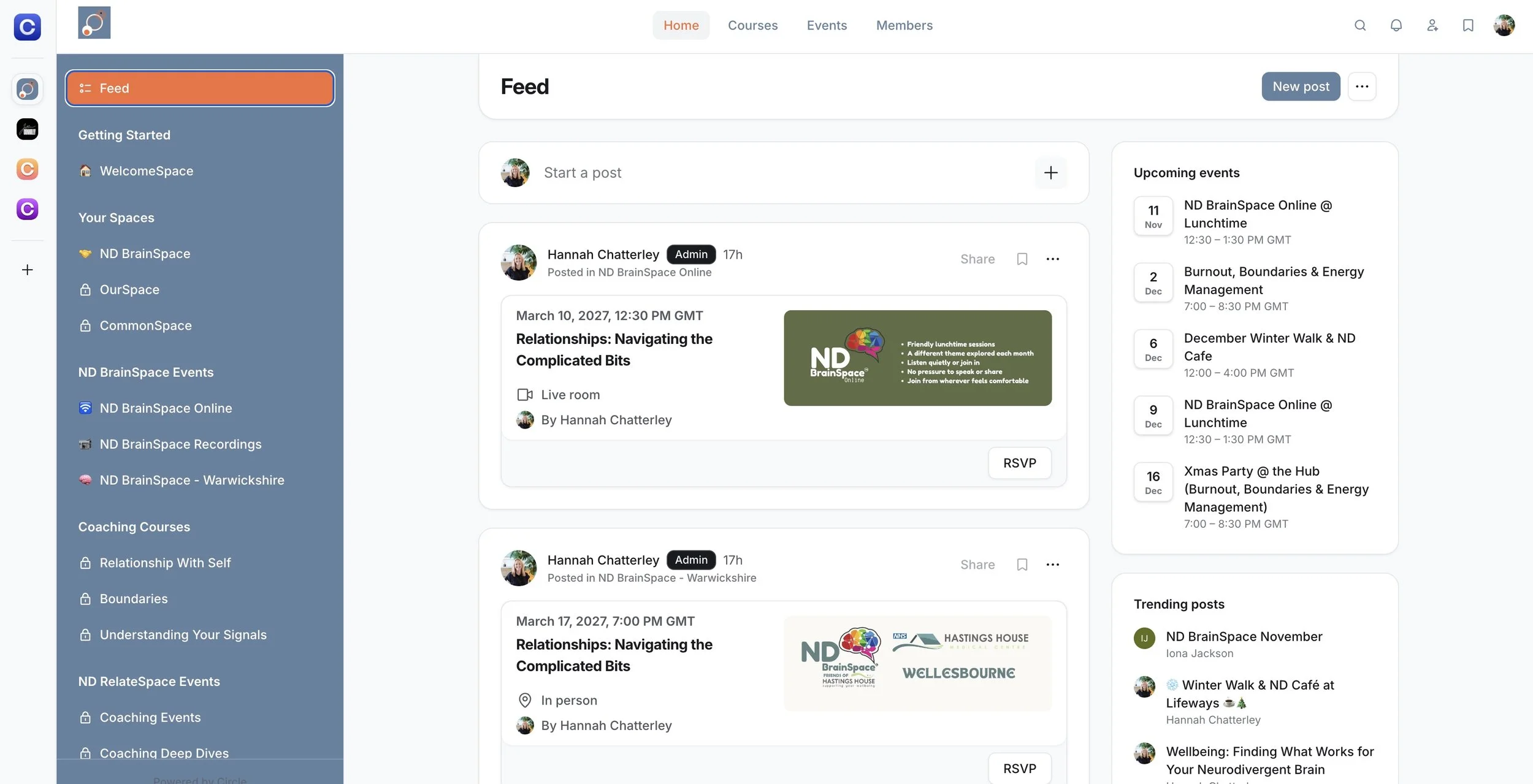
💚 ND BrainSpace has a new online home!
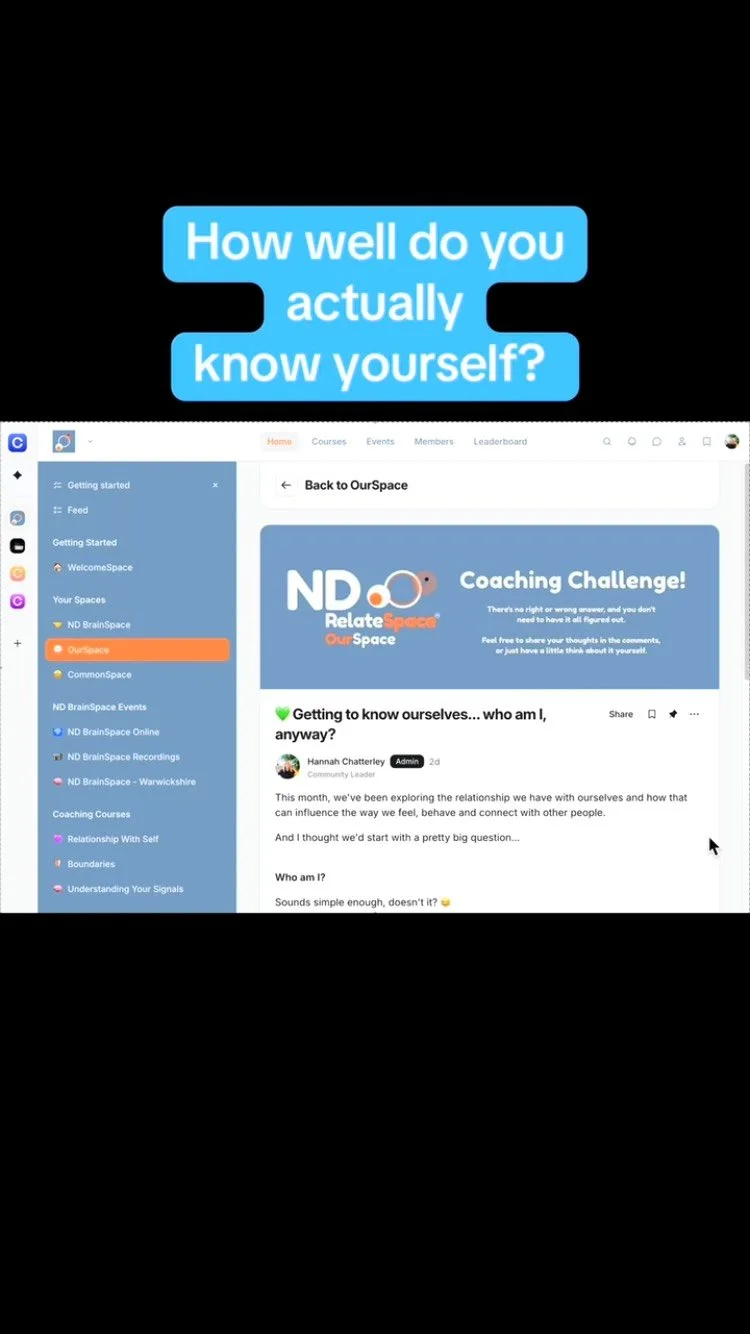
We've brought our ND BrainSpace groups, events and community conversations together in The ND Spaces, making it easier to stay connected and get involved.
What's new?
You can now join our free online community to:
Find and book events – Browse upcoming face-to-face and online peer support groups and RSVP to the sessions you'd like to attend.
Get reminders – Receive event reminders and updates by email, or download the Circle app for notifications on your phone.
Stay connected between meetups – Chat with others, share experiences and make connections.
Get involved – Hear about upcoming social activities, share ideas and help shape what happens next.
How do I join?
It's simple! Create your free account in The ND Spaces, our online community hosted on Circle.
Once you're in, you can explore the ND BrainSpace areas, find upcoming events and book your place.
Upcoming events
Relationship with Self: Self-Trust, Confidence & Social Anxiety
The relationship we have with ourselves can influence how we respond to challenges, recognise our needs and feel around other people. For many neurodivergent people, years of feeling different, masking or worrying about getting things “wrong” can shape our confidence and self-trust — sometimes showing up as overthinking conversations, worrying what others think or questioning whether it’s okay to just be ourselves.
This month we’ll explore self-understanding, self-trust, confidence and social anxiety through a neurodivergent lens. We’ll share experiences, look at what might sit underneath some of that self-doubt, and explore what might help us move towards greater self-compassion and confidence in being ourselves — both on our own and around others.
RSVP here to receive the joining info, and we’ll see you there!
Burnout, Boundaries & Energy Management
RSVP & Join Our Free Community
The festive season can be full of fun and connection, but it can also bring extra demands, expectations and a whole lot of overwhelm!
For neurodivergent adults, the combination of busy schedules, social gatherings, sensory overload, disrupted routines and pressure to keep everyone happy can take its toll. And if you're already running on empty, Christmas can feel like one more thing to get through rather than enjoy.
This month, we're exploring burnout, boundaries and energy management through a neurodivergent lens, with a festive twist. We'll share experiences, recognise when our energy is running low and explore practical ways to manage expectations, set boundaries and make space for our own needs.
Because looking after yourself deserves a place on the Christmas list too! 🎄
Walk and ND Cafe @ Lifeways
Fancy some fresh air, friendly faces and a few festive treats?
Join us for a relaxed winter walk followed by a cosy get-together at Lifeways.
🚶 12.00pm – Winter Walk
Meet at Lifeways and we'll head down to the river for a walk, a chat and some fresh air.
☕ 1.00pm – ND Café at Lifeways
We'll head back to Lifeways for drinks, festive treats and a chance to catch up.
Whether you fancy joining us for the walk, popping in for the café, or doing both, you're very welcome!
A chance to connect with other neurodivergent adults, enjoy some company and get into the festive spirit without all the usual Christmas chaos! 🎄
💚 No pressure to chat, join in with everything or stay for the whole afternoon.
👉 Find out more and register: - ND Spaces
Online : Burnout, Boundaries & Energy Management
RSVP & Join Our Free Community
The festive season can be full of fun and connection, but it can also bring extra demands, expectations and a whole lot of overwhelm!
For neurodivergent adults, the combination of busy schedules, social gatherings, sensory overload, disrupted routines and pressure to keep everyone happy can take its toll. And if you're already running on empty, Christmas can feel like one more thing to get through rather than enjoy.
This month, we're exploring burnout, boundaries and energy management through a neurodivergent lens, with a festive twist. We'll share experiences, recognise when our energy is running low and explore practical ways to manage expectations, set boundaries and make space for our own needs.
Because looking after yourself deserves a place on the Christmas list too! 🎄
Xmas Party @ the Hub (Burnout, Boundaries & Energy Management)
RSVP & Join Our Free Community
We're doing something a little different for December! Instead of our usual session, we're planning an ND BrainSpace snooker social at the club.
A chance to get together, have a game of snooker (or just watch!), chat and enjoy a more relaxed evening without a presentation.
You don't need to know how to play, and there's absolutely no pressure to join in with the games.
Wellbeing - Finding What Works for Your Neurodivergent Brain
RSVP & Join Our Free Community
What does wellbeing actually look like when you're neurodivergent?
We're often told what we should be doing to look after ourselves – exercise, meditation, healthy eating, better sleep, routines… but what happens when those things don't quite work for our brains, or feel difficult to access?
This month, we're exploring wellbeing from a neurodivergent perspective. What helps us feel good? What drains us? And how can we find realistic ways to support our physical, mental and emotional wellbeing without adding another list of things we feel we should be doing?
We'll be chatting about sensory needs, food, movement, rest, sleep, mindfulness and the barriers that can make looking after ourselves more complicated.
It's about discovering what works for you, rather than trying to squeeze yourself into someone else's idea of wellbeing.
Online : Wellbeing - Finding What Works for Your Neurodivergent Brain
RSVP & Join Our Free Community
We're often told what we should be doing to look after ourselves – exercise, meditation, healthy eating, better sleep, routines… but what happens when those things don't quite work for our brains, or feel difficult to access?
This month, we're exploring wellbeing from a neurodivergent perspective. What helps us feel good? What drains us? And how can we find realistic ways to support our physical, mental and emotional wellbeing without adding another list of things we feel we should be doing?
We'll be chatting about sensory needs, food, movement, rest, sleep, mindfulness and the barriers that can make looking after ourselves more complicated.
Wellbeing: Finding What Works for Your Neurodivergent Brain
RSVP & Join Our Free Community
What does wellbeing actually look like when you're neurodivergent?
We're often told what we should be doing to look after ourselves – exercise, meditation, healthy eating, better sleep, routines… but what happens when those things don't quite work for our brains, or feel difficult to access?
This month, we're exploring wellbeing from a neurodivergent perspective. What helps us feel good? What drains us? And how can we find realistic ways to support our physical, mental and emotional wellbeing without adding another list of things we feel we should be doing?
We'll be chatting about sensory needs, food, movement, rest, sleep, mindfulness and the barriers that can make looking after ourselves more complicated.
It's about discovering what works for you, rather than trying to squeeze yourself into someone else's idea of wellbeing.
ND Diagnosis & Support: Exploring Your Options
RSVP & Join Our Free Community
Do I need a diagnosis? Where do I start? And what support is actually out there?
Whether you're newly diagnosed, self-identifying, exploring the possibility of being neurodivergent or have known for years, navigating diagnosis and support can bring up a lot of questions.
This month, we're talking about our experiences of diagnosis, assessment and finding support. From deciding whether to speak to your GP to understanding the different options available, including therapy, coaching, mentoring, medication and local services.
We'll be sharing experiences, asking questions and exploring what has (and hasn't!) worked for us.
There's no one right path, and everyone's needs and choices will be different.
An opportunity to learn from each other, explore your options and feel a little less alone in figuring it all out.
Relationships: Navigating the Complicated Bits
RSVP & Join Our Free Community
Why can relationships feel so complicated sometimes?
Relationships can bring connection, joy and belonging, but they can also be confusing, intense and challenging, particularly when we're navigating different communication styles, emotional responses and past experiences.
This month, we're exploring some of the trickier parts of relationships through a neurodivergent lens.
We'll be chatting about rejection sensitivity (often called RSD), attachment patterns, the impact of past experiences and trauma, emotional intensity, trust and the challenges of understanding ourselves and others.
How do these experiences shape our relationships? What patterns do we notice? And how can we develop greater understanding, communicate our needs and build connections that work for us?
An open conversation about the messy, complicated and very human side of relationships – without judgement or expectations.
Relationship with Self: Self-Trust, Confidence & Social Anxiety
Relationship with Myself: Self-Trust, Confidence & Social Anxiety
The relationship we have with ourselves can influence how we respond to challenges, recognise our needs and feel around other people. For many neurodivergent people, years of feeling different, masking or worrying about getting things “wrong” can shape our confidence and self-trust — sometimes showing up as overthinking conversations, worrying what others think or questioning whether it’s okay to just be ourselves.
This month we’ll explore self-understanding, self-trust, confidence and social anxiety through a neurodivergent lens. We’ll share experiences, look at what might sit underneath some of that self-doubt, and explore what might help us move towards greater self-compassion and confidence in being ourselves — both on our own and around others.
We'll explore
✨ Common experiences: self-criticism, perfectionism, masking, comparison, imposter syndrome, people pleasing, shame, feeling "not enough", difficulty recognising strengths, and learning to trust yourself.
🛠️ What can help: Understanding your neurodivergent brain, recognising your strengths, noticing your inner dialogue, setting realistic expectations, celebrating progress, practising self-compassion and learning to trust your own needs, values and decisions.
Whether you're diagnosed, self-identified, or simply curious about neurodivergence (ADHD, autism, dyslexia and more), ND BrainSpace is for you.
All our groups are currently free to attend. Pay-what-you-can contributions are gratefully received here:
https://buy.stripe.com/aFaeVe15a6Rm1ot9RKcwg00
This helps cover room hire, refreshments and other essentials — and helps us keep ND BrainSpace going for as long as possible. Thank you :)
Please note: ND BrainSpace is a peer-support and community group. The conversations and information shared come from lived experience. They should not be taken as medical, therapeutic, or professional advice. If you need medical or professional support, we encourage you to seek guidance from qualified services.
Overwhelm, Shutdown & Connection
Overwhelm, Shutdown & Connection
When we’re overwhelmed, it doesn’t just affect how we feel internally — it can affect how we communicate, connect and respond to the people around us. We might go quiet, lose access to words, become irritable, need to get away, cancel plans or struggle to explain what we need. And sometimes other people can interpret those responses very differently from how they feel on the inside.
This month we’ll explore overwhelm and shutdown through a neurodivergent lens, including what happens when our capacity gets stretched, how that can show up in our relationships, and what might help us understand ourselves and each other better.
We’ll explore
✨ When everything gets too much
Sensory overload, emotional overwhelm, too many demands, decision fatigue, losing words, irritability, withdrawal and shutdown — and noticing what our own signs of overload might look like.
💬 Overwhelm in relationships
What happens when we don’t have the capacity to communicate in the way we normally would? We’ll explore needing space, misunderstandings, different communication needs, cancelling or withdrawing, asking for help and that sometimes very difficult question: “How do I explain what I need when I can’t find the words?”
🛠️ What might help
Recognising our signs earlier, communicating needs before we reach capacity, finding ways to make things easier in the moment, creating recovery time and talking with the people around us about what support actually looks like.
Register here to receive the joining info, and we’ll see you there!
All our groups are currently free to attend. Pay-what-you-can contributions are gratefully received here:
https://buy.stripe.com/aFaeVe15a6Rm1ot9RKcwg00
This helps us keep ND BrainSpace going for as long as possible. Thank you :)
Please note: ND BrainSpace is a peer-support and community group. The conversations and information shared come from lived experience. They should not be taken as medical, therapeutic, or professional advice. If you need medical or professional support, we encourage you to seek guidance from qualified services.
Overwhelm, Shutdown & Connection
Overwhelm, Shutdown & Connection
When we’re overwhelmed, it doesn’t just affect how we feel internally — it can affect how we communicate, connect and respond to the people around us. We might go quiet, lose access to words, become irritable, need to get away, cancel plans or struggle to explain what we need. And sometimes other people can interpret those responses very differently from how they feel on the inside.
This month we’ll explore overwhelm and shutdown through a neurodivergent lens, including what happens when our capacity gets stretched, how that can show up in our relationships, and what might help us understand ourselves and each other better.
We’ll explore
✨ When everything gets too much
Sensory overload, emotional overwhelm, too many demands, decision fatigue, losing words, irritability, withdrawal and shutdown — and noticing what our own signs of overload might look like.
💬 Overwhelm in relationships
What happens when we don’t have the capacity to communicate in the way we normally would? We’ll explore needing space, misunderstandings, different communication needs, cancelling or withdrawing, asking for help and that sometimes very difficult question: “How do I explain what I need when I can’t find the words?”
🛠️ What might help
Recognising our signs earlier, communicating needs before we reach capacity, finding ways to make things easier in the moment, creating recovery time and talking with the people around us about what support actually looks like.
All our groups are currently free to attend. Pay-what-you-can contributions are gratefully received here:
https://buy.stripe.com/aFaeVe15a6Rm1ot9RKcwg00
This helps cover room hire, refreshments and other essentials — and helps us keep ND BrainSpace going for as long as possible. Thank you :)
Please note: ND BrainSpace is a peer-support and community group. The conversations and information shared come from lived experience. They should not be taken as medical, therapeutic, or professional advice. If you need medical or professional support, we encourage you to seek guidance from qualified services.
Transitions, Change & Uncertainty
Transitions, Change & Uncertainty
Change can be difficult when you’re neurodivergent — even the “small” kinds. A change in routine, plans, expectations, relationships, work, identity or environment can leave ND brains feeling overwhelmed, stuck, anxious or completely thrown off balance.
This session explores the lived experience of transitions and uncertainty for neurodivergent adults — from everyday disruptions to major life shifts.
We’ll explore
✨ Common experiences
Waiting mode, decision paralysis, disrupted routines, anxiety around the unknown, shutdowns, emotional overwhelm, change fatigue, and struggling to adapt when life moves unexpectedly.
🛠️ What can help
Predictability, preparation, recovery time, realistic expectations, self-understanding, communication, and practical ways to create stability during uncertain times.
Register here to receive the joining info, and we’ll see you there!
All our groups are currently free to attend. Pay-what-you-can contributions are gratefully received here:
https://buy.stripe.com/aFaeVe15a6Rm1ot9RKcwg00
This helps us keep ND BrainSpace going for as long as possible. Thank you :)
Please note: ND BrainSpace is a peer-support and community group. The conversations and information shared come from lived experience. They should not be taken as medical, therapeutic, or professional advice. If you need medical or professional support, we encourage you to seek guidance from qualified services.
Transitions, Change & Uncertainty
Transitions, Change & Uncertainty
Change can be difficult when you’re neurodivergent — even the “small” kinds. A change in routine, plans, expectations, relationships, work, identity or environment can leave ND brains feeling overwhelmed, stuck, anxious or completely thrown off balance.
This session explores the lived experience of transitions and uncertainty for neurodivergent adults — from everyday disruptions to major life shifts.
We’ll explore
✨ Common experiences
Waiting mode, decision paralysis, disrupted routines, anxiety around the unknown, shutdowns, emotional overwhelm, change fatigue, and struggling to adapt when life moves unexpectedly.
🛠️ What can help
Predictability, preparation, recovery time, realistic expectations, self-understanding, communication, and practical ways to create stability during uncertain times.
All our groups are currently free to attend. Pay-what-you-can contributions are gratefully received here:
https://buy.stripe.com/aFaeVe15a6Rm1ot9RKcwg00
This helps cover room hire, refreshments and other essentials — and helps us keep ND BrainSpace going for as long as possible. Thank you :)
Please note: ND BrainSpace is a peer-support and community group. The conversations and information shared come from lived experience. They should not be taken as medical, therapeutic, or professional advice. If you need medical or professional support, we encourage you to seek guidance from qualified services.
Sensory Differences (Online)
Sensory Differences
Understanding your sensory needs — and how they shape your experience of the world — can be a big part of making life feel more manageable.
For many neurodivergent people, things like noise, light, touch, or busy environments aren’t just minor annoyances. They can affect focus, energy, emotions, and overall wellbeing in really significant ways.
This session explores sensory differences through lived experience — not as something to “fix,” but something to understand and work with.
We’ll explore
✨ Common experiences
Sensory overload, shutdown, meltdowns, sensitivity to noise/light/touch, seeking or avoiding certain sensations, fluctuating tolerance, and the impact on energy, mood, and daily life.
🛠️ What can help
Recognising your sensory patterns, noticing early signs of overwhelm, creating supportive environments, using tools (like headphones or movement), and building in recovery time.
Register here to receive the joining info, and we’ll see you there!
All our groups are currently free to attend. Pay-what-you-can contributions are gratefully received here:
https://buy.stripe.com/aFaeVe15a6Rm1ot9RKcwg00
This helps us keep ND BrainSpace going for as long as possible. Thank you :)
Please note: ND BrainSpace is a peer-support and community group. The conversations and information shared come from lived experience. They should not be taken as medical, therapeutic, or professional advice. If you need medical or professional support, we encourage you to seek guidance from qualified services.
Sensory Regulation
Sensory Regulation
Understanding your sensory needs — and how they shape your experience of the world — can be a big part of making life feel more manageable.
For many neurodivergent people, things like noise, light, touch, or busy environments aren’t just minor annoyances. They can affect focus, energy, emotions, and overall wellbeing in really significant ways.
This session explores sensory differences through lived experience — not as something to “fix,” but something to understand and work with.
We’ll explore
✨ Common experiences
Sensory overload, shutdown, meltdowns, sensitivity to noise/light/touch, seeking or avoiding certain sensations, fluctuating tolerance, and the impact on energy, mood, and daily life.
🛠️ What can help
Recognising your sensory patterns, noticing early signs of overwhelm, creating supportive environments, using tools (like headphones or movement), and building in recovery time.
All our groups are currently free to attend. Pay-what-you-can contributions are gratefully received here:
https://buy.stripe.com/aFaeVe15a6Rm1ot9RKcwg00
This helps cover room hire, refreshments and other essentials — and helps us keep ND BrainSpace going for as long as possible. Thank you :)
Please note: ND BrainSpace is a peer-support and community group. The conversations and information shared come from lived experience. They should not be taken as medical, therapeutic, or professional advice. If you need medical or professional support, we encourage you to seek guidance from qualified services.
Community Social
Community Social — Lunchtime Online
Join us for a relaxed online community social on Tuesday 9th June, 12:30–1:30pm.
Come along from wherever you are — desk, sofa, bed, garden chair, or a quiet corner you’ve claimed for the hour.
We’ll also have an optional show and tell, so if you’d like to, feel free to bring along something you’re enjoying, making, reading, researching, fixing, creating, collecting, or currently hyperfocused on.
Camera off for listening or on for chatting — whatever works best for you on the day. No pressure to join in verbally, and absolutely no expectation to “social properly”.
Hosted on Google Meet.
Register here to receive the joining info, and we’ll see you there 💛
All our groups are currently free to attend. Pay-what-you-can contributions are gratefully received here:
https://buy.stripe.com/aFaeVe15a6Rm1ot9RKcwg00
This helps cover running costs and other essentials — and helps us keep ND BrainSpace going for as long as possible. Thank you :)
Please note: ND BrainSpace is a peer-support and community group. The conversations and information shared come from lived experience. They should not be taken as medical, therapeutic, or professional advice. If you need medical or professional support, we encourage you to seek guidance from qualified services.

Summer Social
ND BrainSpace Summer Social at Lifeways
Join us for a relaxed and welcoming summer social on Wednesday 3rd June, 7:00–8:30pm at Lifeways.
We’ll be making the most of the beautiful Lifeways gardens — a calm, leafy space with plenty of room to spread out, chat quietly, wander a little, or simply enjoy being outdoors together. We know social spaces can sometimes feel intense, so we’re aiming for something gentle, flexible, and low-pressure.
This is a welcoming space for neurodivergent adults to connect, chat, and spend time together without awkward icebreakers or expectations. Friends, family members, partners, carers, support people, and support animals (on leads / safely secured) are all very welcome too.
✨ What’s a “show and tell”?
Absolutely no public-speaking skills required. It simply means you’re welcome to bring along something you’d enjoy sharing with the group — or just chatting about naturally if the moment comes up.
That might be:
a craft project
a favourite game
something you’re making or learning
a comfort item or collection
a current hyperfocus
or anything else that brings you joy
There’s no pressure to bring anything at all, and no pressure to “perform”. Listening quietly is equally welcome.
We’ll provide biscuits and soft drinks, and you’re very welcome to bring your own refreshments or something to share if you’d like.
An RSVP to hannah@chooseyourway.co.uk is really helpful so we can plan numbers (and make sure there are enough biscuits for everyone!).
If you have any severe allergies or accessibility requirements, please let us know before the event or when you arrive.
We’d love to see you there 💛
📍 Directions to Lifeways
https://www.lifewaystherapycentre.com/images/lifeways_directions.pdf
💛 Supporting ND BrainSpace
All our groups are currently free to attend. Pay-what-you-can contributions are gratefully received here:
https://buy.stripe.com/aFaeVe15a6Rm1ot9RKcwg00
This helps cover room hire, refreshments, and other essentials — and helps us keep ND BrainSpace going for as long as possible. Thank you :)
🌱 A gentle reminder
ND BrainSpace is a peer-support and community group. The conversations and information shared come from lived experience and should not be taken as medical, therapeutic, or professional advice.
If you need medical or professional support, we encourage you to seek guidance from appropriately qualified services.
Identity & Masking — Lunchtime Online
Identity & Masking — Lunchtime Online
Join us from wherever you are — desk, sofa, bed, or a quiet corner you’ve claimed for the hour.
Camera off for listening or on for chatting — whatever works best for you on the day.
Masking can be part of everyday life for neurodivergent people — at work, in relationships, and out in the world. It can help us get by, but it can also be tiring, confusing, and make it hard to know who we really are underneath it all.
This session explores identity and masking for neurodivergent adults, grounded in lived experience rather than expectations or labels.
We’ll explore
✨ Common experiences
Masking and unmasking, people-pleasing, imposter syndrome, late identification, identity shifts, and the sense of not quite fitting anywhere.
🛠️ What can help
Noticing when you’re masking, understanding why, experimenting with safer ways to be yourself, and making sense of your identity over time.
We’ll reflect together
💭 When do you notice yourself masking most?
💭 What parts of yourself feel easiest — or hardest — to show?
💭 What might it look like to feel more at ease as yourself?
Register here to receive the joining info, and we’ll see you there!
All our groups are currently free to attend. Pay-what-you-can contributions are gratefully received here:
https://buy.stripe.com/aFaeVe15a6Rm1ot9RKcwg00
This helps cover room hire, refreshments and other essentials — and helps us keep ND BrainSpace going for as long as possible. Thank you :)
Please note: ND BrainSpace is a peer-support and community group. The conversations and information shared come from lived experience. They should not be taken as medical, therapeutic, or professional advice. If you need medical or professional support, we encourage you to seek guidance from qualified services.
Identity & Masking
Identity & Masking
Figuring out who you are — and how much of yourself you show — can be complicated when you’re neurodivergent. Masking can help you get through work, relationships or everyday life, but it can also be exhausting, confusing, and disconnecting over time.
This session explores identity and masking for neurodivergent adults, drawing on lived experience rather than labels or expectations.
We’ll explore
✨ Common experiences
Masking and unmasking, people-pleasing, imposter syndrome, late identification, identity shifts, internalised expectations, and the feeling of not quite fitting anywhere.
🛠️ What can help
Noticing when you’re masking, understanding why you do it, experimenting with safer ways to be yourself, and making sense of who you are underneath the performance.
Together we’ll ask
💭 When and where do you mask most?
💭 What parts of yourself feel hardest to show?
💭 What might it look like to feel more at ease in your own skin?
All our groups are currently free to attend. Pay-what-you-can contributions are gratefully received here:
https://buy.stripe.com/aFaeVe15a6Rm1ot9RKcwg00
This helps cover room hire, refreshments and other essentials — and helps us keep ND BrainSpace going for as long as possible. Thank you :)
Please note: ND BrainSpace is a peer-support and community group. The conversations and information shared come from lived experience. They should not be taken as medical, therapeutic, or professional advice. If you need medical or professional support, we encourage you to seek guidance from qualified services.
Boundaries & Self-Care — Lunchtime Online
🌿 Boundaries & Self-Care — Lunchtime Online
Join us from your desk, sofa, bed, parked car or wherever you can grab a bit of breathing space.
Camera off for quiet listening or on for chatting — whatever feels easiest on the day.
This month we’re exploring boundaries and self-care for neurodivergent adults — the real stuff, not the “just take a bubble bath” version.
✨ Common challenges
Saying yes when you mean no, people-pleasing, masking at your own expense, sensory overload, guilt, blurred boundaries, and realising you’re burnt out after it’s already happened.
🌱 What helps
Noticing your limits sooner, pacing, realistic self-care, clearer boundaries, recovering energy, and letting go of the idea that self-care has to look a certain way.
🛠️ Practical ideas
Ways to protect your energy, communicate boundaries (without over-explaining), reduce burnout cycles, and figure out what looking after yourself actually looks like for you.
We’ll explore together:
💭 Where do your boundaries tend to slip?
💭 What drains you — and what helps you recover?
💭 What might self-care look like if it was practical, not performative?
Register here to receive the joining info, and we’ll see you there!
All our groups are currently free to attend. Pay-what-you-can contributions are gratefully received here:
https://buy.stripe.com/aFaeVe15a6Rm1ot9RKcwg00
This helps cover room hire, refreshments and other essentials — and helps us keep ND BrainSpace going for as long as possible. Thank you :)
Please note: ND BrainSpace is a peer-support and community group. The conversations and information shared come from lived experience. They should not be taken as medical, therapeutic, or professional advice. If you need medical or professional support, we encourage you to seek guidance from qualified services.
Boundaries & Self-Care
Boundaries & Self-Care
Boundaries and self-care can feel especially complicated when you’re neurodivergent — knowing where your limits are, how to communicate them, and how to look after yourself without burning out or people-pleasing your way into exhaustion.
This month we’re focusing on the real, lived experience of boundaries and self-care for ND adults.
We’ll explore:
✨ Common challenges — saying yes when you mean no, masking at your own expense, sensory overload, energy depletion, guilt, people-pleasing, blurred boundaries, and not noticing you’re overwhelmed until it’s too late.
🛠️ What actually helps — recognising your limits, pacing, realistic self-care (not the Instagram kind), communicating boundaries, reducing burnout cycles, and finding ways to protect your energy that work for your brain.
Together we’ll ask:
💭 Where do your boundaries get stretched or ignored?
💭 What drains you — and what helps you recover?
💭 What might self-care look like if it was practical, not performative?
All our groups are currently free to attend. Pay-what-you-can contributions are gratefully received here:
https://buy.stripe.com/aFaeVe15a6Rm1ot9RKcwg00
This helps cover room hire, refreshments and other essentials — and helps us keep ND BrainSpace going for as long as possible. Thank you :)
Please note: ND BrainSpace is a peer-support and community group. The conversations and information shared come from lived experience. They should not be taken as medical, therapeutic, or professional advice. If you need medical or professional support, we encourage you to seek guidance from qualified services.
Work, Careers & The ND Brain Online at Lunchtime
Work, Careers & The ND Brain
Join us from your kitchen table, office chair, sofa cocoon or anywhere you can sneak a few minutes.
Camera off for quiet listening or on for chatting — whatever feels easiest on the day.
This month we’re unpacking the realities of work and careers when your brain doesn’t follow the standard settings.
✨ Common challenges
Sensory overload, organisation hurdles, uneven motivation, burnout cycles, tricky feedback, misunderstandings and the pressure to mask.
🌱 Strengths & superpowers
Creativity, deep-focus bursts, problem-solving, empathy, innovative thinking — the brilliant stuff that often gets overlooked.
🛠️ Practical strategies
Workplace adjustments, communication ideas, pacing, energy management, and shaping roles to suit how you actually function.
We’ll explore together:
💭 What makes work harder than it needs to be?
💭 What helps you show up as your real self?
💭 What kind of work life feels more aligned with you?
Register here to receive the joining info, and we’ll see you there!
All our groups are currently free to attend. Pay-what-you-can contributions are gratefully received here:
https://buy.stripe.com/aFaeVe15a6Rm1ot9RKcwg00
This helps cover room hire, refreshments and other essentials — and helps us keep ND BrainSpace going for as long as possible. Thank you :)
Please note: ND BrainSpace is a peer-support and community group. The conversations and information shared come from lived experience. They should not be taken as medical, therapeutic, or professional advice. If you need medical or professional support, we encourage you to seek guidance from qualified services.
Work, Careers & The ND Brain
ND BrainSpace: Work, Careers & The ND Brain
Work can be a minefield when you’re neurodivergent — brilliant strengths sitting right alongside energy crashes, communication tangles, overwhelm, and the eternal mystery of “why can everyone else just… do that?”.
This month we’re diving into the real-world experience of ND folks in the workplace.
We’ll explore:
✨ Common challenges – sensory overload, organisation struggles, uneven motivation, burnout cycles, masking at work, tricky feedback, misunderstandings, and the chaotic dance of deadlines.
🛠️ Practical solutions – workplace adjustments, communication strategies, pacing at work, energy management, job-crafting, and figuring out what actually works for your brain.
Together we’ll ask:
💭 What makes work harder for you than it needs to be?
💭 What helps you thrive — or at least cope — in a work setting?
💭 What kind of career path feels more aligned with who you are?
All our groups are currently free to attend. Pay-what-you-can contributions are gratefully received here:
https://buy.stripe.com/aFaeVe15a6Rm1ot9RKcwg00
This helps cover room hire, refreshments and other essentials — and helps us keep ND BrainSpace going for as long as possible. Thank you :)
Please note: ND BrainSpace is a peer-support and community group. The conversations and information shared come from lived experience. They should not be taken as medical, therapeutic, or professional advice. If you need medical or professional support, we encourage you to seek guidance from qualified services.
ND Relationships — Lunchtime Online
ND Relationships — Lunchtime Online
Join us from your sofa, desk, bed, parked car, or blanket nest… wherever feels most comfortable.
Listen along with your camera off, or hop into the chat if you fancy sharing — totally your choice.
This month we’re diving into the beautifully messy world of ND relationships — romantic, platonic, somewhere-in-between, or still-figuring-it-out.
✨ Common challenges
Communication tangles, mixed signals, sensory overwhelm, masking, rejection sensitivity, and the classic “I want people… but not too close… but also don’t leave me” dance.
💛 What helps
Clearer boundaries, honest conversations, realistic expectations, and finding people who actually like your real brain.
🌿 Being yourself
The relief of dropping the mask — and the bravery it sometimes needs.
We’ll explore together:
💭 What makes connection tricky for you?
💭 What kind of relationships feel safe and nourishing?
💭 What small tweaks could make connection easier?
Register here to receive the joining info, and we’ll see you there!
All our groups are currently free to attend. Pay-what-you-can contributions are gratefully received here:
https://buy.stripe.com/aFaeVe15a6Rm1ot9RKcwg00
This helps cover room hire, refreshments and other essentials — and helps us keep ND BrainSpace going for as long as possible. Thank you :)
Please note: ND BrainSpace is a peer-support and community group. The conversations and information shared come from lived experience. They should not be taken as medical, therapeutic, or professional advice. If you need medical or professional support, we encourage you to seek guidance from qualified services.
ND Relationships
ND BrainSpace: Relationships – Finding People You Can Actually Be Yourself With
Relationships can be wonderful… and also wildly complicated when you’re neurodivergent.
Whether romantic, platonic, queerplatonic, family-ish or “I’m still not sure what this is” — connecting with people who get you (or at least genuinely try to) can feel tricky.
This month we’re exploring the messy, tender reality of ND relationships.
We’ll look at:
✨ Common challenges – communication mismatches, sensory overload, rejection sensitivity, masking, mixed signals, energy crashes, and the classic “I want connection but also please leave me alone”.
💛 What helps – clearer boundaries, softer expectations, honest conversations, different ways of showing care, and finding people who actually like your real brain.
🌿 Being yourself – the relief of dropping the mask, and the courage it sometimes takes.
Together we’ll ask:
💭 What gets in the way of connection for you?
💭 What kind of relationships feel safe and nourishing?
💭 What small changes could make connection easier?
All our groups are currently free to attend. Pay-what-you-can contributions are gratefully received here:
https://buy.stripe.com/aFaeVe15a6Rm1ot9RKcwg00
This helps cover room hire, refreshments and other essentials — and helps us keep ND BrainSpace going for as long as possible. Thank you :)
Please note: ND BrainSpace is a peer-support and community group. The conversations and information shared come from lived experience. They should not be taken as medical, therapeutic, or professional advice. If you need medical or professional support, we encourage you to seek guidance from qualified services.
ND BrainSpace - Online at Lunchtime
🌿 A Neurodivergent New Year — Lunchtime Online
Join us from the comfort of your sofa, desk, bed, blanket fort… whatever works.
Dial in and simply listen along, or pop your camera on if you fancy joining the chat — totally your choice.
This month we’re gently easing into the year with some honest reflection:
✨ What I’m leaving behind
The habits, expectations and energy-drainers that never actually worked (no matter how hard you tried to make them).
🌱 What I’m taking forward
The small wins, helpful routines and bits of self-knowledge that made life a little kinder last year.
❄️ Winter survival tips
Because January isn’t always the time for a dramatic reinvention — sometimes it’s a season for blankets, pacing and doing what’s realistic.
We’ll explore together:
💭 What surprised you about yourself last year?
💭 What helped you feel well — and what didn’t?
💭 What might a “good enough” start to 2026 look like?
Register here to receive the joining info, and we’ll see you there!
All our groups are currently free to attend. Pay-what-you-can contributions are gratefully received here:
https://buy.stripe.com/aFaeVe15a6Rm1ot9RKcwg00
This helps cover room hire, refreshments and other essentials — and helps us keep ND BrainSpace going for as long as possible. Thank you :)
Please note: ND BrainSpace is a peer-support and community group. The conversations and information shared come from lived experience. They should not be taken as medical, therapeutic, or professional advice. If you need medical or professional support, we encourage you to seek guidance from qualified services.
ND BrainSpace - January
A Neurodivergent New Year
January can feel like an evaluation form nobody asked for. Resolutions, “new year, new me”, pressure to optimise… meanwhile ND brains are often still decompressing from December.
This month we’re doing it differently. No reinvention. No hustle. Just honest reflection.
We’ll explore:
✨ What I’m leaving behind – habits, expectations, environments or routines that drained you, overwhelmed you, or just never actually worked.
🌱 What I’m taking forward – the tiny wins, helpful patterns, comforting things and self-knowledge that made life a little easier last year.
❄️ Winter survival tips – because January might not be the moment for a full personal rebrand; maybe blankets and hibernating might be more realistic.
Together we’ll ask:
💭 What surprised you about yourself last year?
💭 What supported your wellbeing… and what sabotaged it?
💭 What would a “good-enough” start to 2026 look like?
All our groups are currently free to attend. Pay-what-you-can contributions are gratefully received here:
https://buy.stripe.com/aFaeVe15a6Rm1ot9RKcwg00
This helps cover room hire, refreshments and other essentials — and helps us keep ND BrainSpace going for as long as possible. Thank you :)
Please note: ND BrainSpace is a peer-support and community group. The conversations and information shared come from lived experience. They should not be taken as medical, therapeutic, or professional advice. If you need medical or professional support, we encourage you to seek guidance from qualified services.
ND BrainSpace
Join us at the ND BrainSpace!
Our Third topic is ‘Surviving the Holiday Season’ – swapping tips for less stress and more sparkle.
Come along for an evening of connection, conversation, and community…
ND BrainSpace
Join us at ND BrainSpace!
Our second topic is Wellbeing. We all want it. There are endless solutions out there – but what actually works for you?
Come along for an evening of connection, conversation, and community…
ND BrainSpace
Join us for the very first ND BrainSpace!
Our first topic is Anxiety - we all experience it, but how does neurodivergence shape it? And what have you found that helps you manage it?
A new monthly group in Stratford-upon-Avon, created by and for neurodivergent adults.
Come along for an evening of connection, conversation, and community…
News & Ideas
Follow along…